
Seagate FireCuda Forge pairs large game-library storage with a required NVMe upgrade
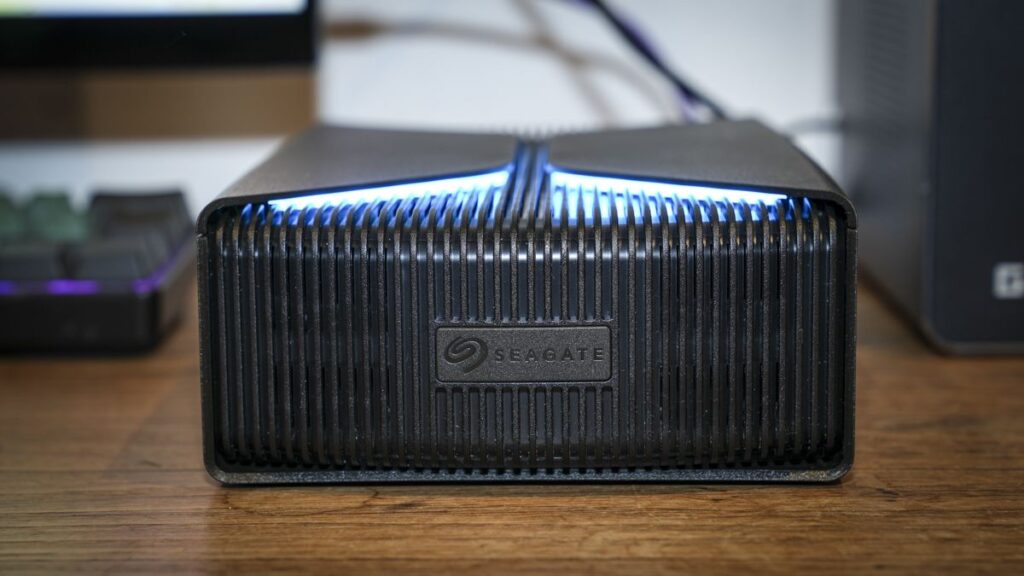
Seagate’s FireCuda Forge brings automated SSD caching to an external hard drive aimed at gamers and creators, with one significant purchase requirement: buyers must supply the NVMe SSD themselves. TechRadar reports that the device combines a mechanical drive with an M.2 slot for separately purchased flash storage.
For PC players with large libraries, the appeal is having substantial capacity alongside faster access to frequently used files. However, the design’s usefulness depends on how its automated storage management handles changing workloads; the supplied report does not establish real-world gaming performance.
One volume, two storage technologies
Seagate’s Alkemi platform monitors file activity and places frequently accessed data on the installed NVMe SSD. Less frequently used material stays on the mechanical disk, with placement changing as usage patterns shift. Both components appear as a single storage volume.
The approach revisits the hybrid-drive concept Seagate previously pursued with its Momentus 5400 PSD in 2007. Flash assists access to selected data, while the hard disk provides bulk capacity. That distinction matters: the mechanical portion does not acquire the performance characteristics of an SSD.
The SSD adds to the purchase price
According to TechRadar, the FireCuda Forge is offered in an 8TB configuration for $699 and a 20TB version for $899. Both include upgradeable mechanical storage. The report says the device cannot be accessed until an SSD is installed, making that extra purchase essential.
Seagate advertises sequential reads of up to 2,500MB/s and writes of up to 2,000MB/s. Those are manufacturer claims, rather than performance results established here. Connectivity is USB4, with listed operating-system support covering Windows 11 and macOS 26 or later.
For prospective buyers, the practical comparison is therefore the complete setup cost: the Forge’s advertised price plus a compatible NVMe drive, weighed against the convenience of automatically managed storage.