
Spare Android phones offer a route into controller-based retro gaming
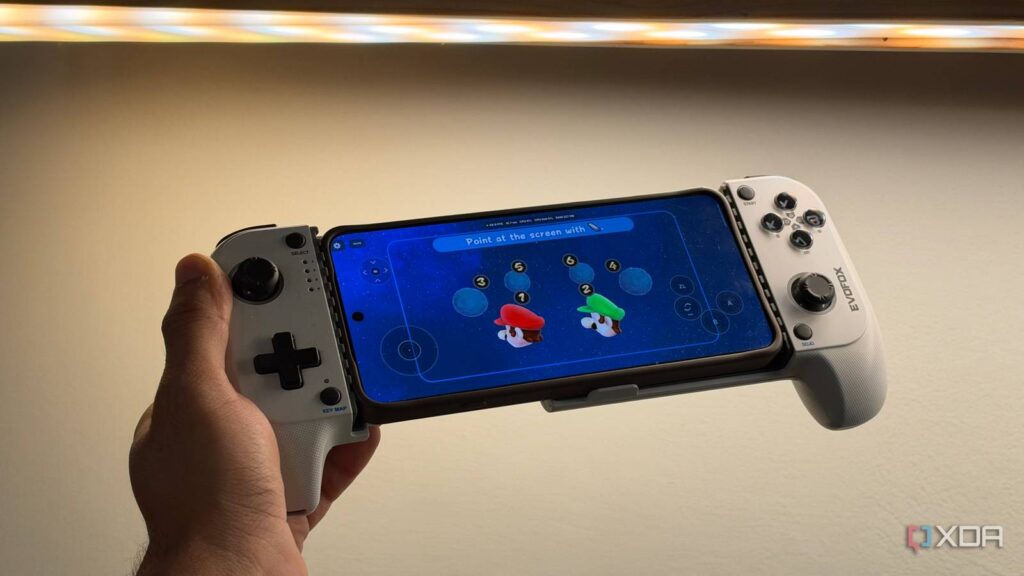
A spare Android flagship can provide the foundation for a retro gaming handheld, with an external controller supplying the physical controls. In a November 1, 2026 feature for XDA Developers, Dhruv Bhutani describes the approach as a way to reuse hardware already sitting in a drawer.
The practical appeal is straightforward: an existing phone already contains the display, processor, battery and storage. Adding controls puts those components to another use, although the result still carries compromises compared with a dedicated gaming device.
Controls and software shape the setup
Bhutani favors telescopic controllers that clamp around the phone and provide analog sticks, a directional pad and familiar face buttons. Depending on the model, the connection can use USB or Bluetooth. His preference is Bluetooth, citing positioning flexibility and avoiding strain on the phone’s USB port.
On the software side, the feature points to RetroArch, which brings multiple emulator cores together behind one interface. Other frontends offer additional ways to organize and customize a gaming library.
The report identifies older 2D games and many original PlayStation, Nintendo 64 and Dreamcast titles as potential targets. It also acknowledges that the emulation ceiling depends on the specific phone and games; readers should not interpret the setup as a guarantee of compatibility or performance.
Portability comes with trade-offs
Bhutani notes that a phone paired with a controller can be heavier and less ergonomic than a purpose-built handheld. Emulation also consumes battery power, an especially relevant limitation when the device doubles as an everyday phone.
For readers with a spare device, the project’s value is in reusing its existing components. Controller fit, comfort and the games they want to play remain central to whether that arrangement makes sense.