
Windows security checks could give PC apps more control over launch requirements
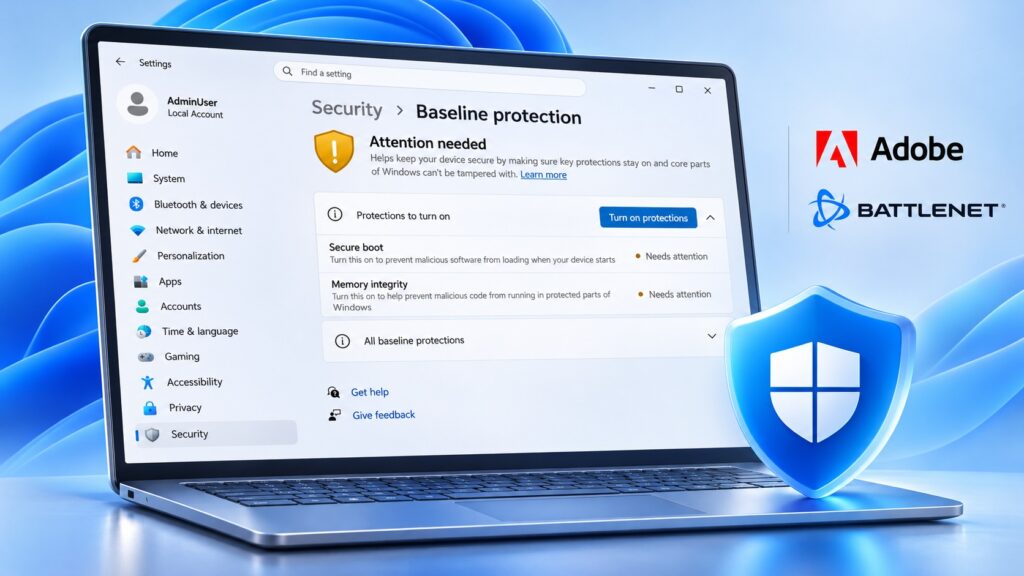
PC gamers who switch off Windows security protections could eventually encounter additional application requirements under Windows Baseline Protection, a verification system described in Wccftech’s November 18 report. Developers would decide how their software responds when a computer fails the checks.
According to the report, Microsoft announced the system at Ignite 2026. It is available in preview through the Windows Insider Program, with general availability planned for 2027. Early participants include Adobe, Blizzard’s Battle.net and 1Password.
What the verification covers
The initial implementation checks eight protections: a security processor including TPM 2.0, Secure Boot, Virtualization-Based Security, Memory Integrity, signed drivers, Windows-certified drivers, kernel debugger protection and vulnerable driver protection. A PC must meet every requirement to pass.
Windows evaluates these protections during startup. Applications can request a pass-or-fail result, information about missing protections or a hardware-backed attestation token for further verification.
Failing the check would not automatically prevent every application from running. Wccftech reports that developers could allow normal operation, show a warning, limit functionality or refuse to launch their software.
What this could mean for players
The potential concern for gamers is configuration compatibility: disabling VBS or Memory Integrity could leave a PC unable to pass the baseline. Whether that affects a particular game would depend on its developer’s implementation.
Neither Adobe nor Blizzard has confirmed plans to block applications on computers that fail verification, according to the report. Participation in testing therefore does not establish a future Battle.net launch requirement.
A dedicated Baseline protection page in Windows Settings is intended to show which requirements are met. Some protections could be enabled there, while firmware changes may require entering UEFI settings and restarting. For players, the practical issue will be which checks individual developers choose to enforce as the technology moves beyond preview.