
ESGAMING ZERO MAX combines panoramic glass with GPU-focused intake design
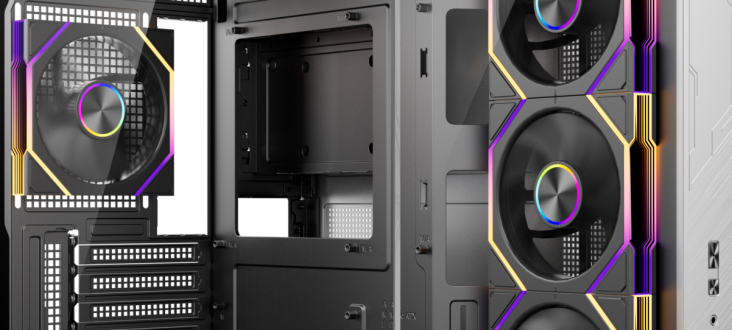
ESGAMING’s ZERO MAX PC case puts graphics card airflow at the centre of its design, using an eight-degree bottom duct intended to direct incoming air towards the GPU. KitGuru’s November 15 report details a chassis that combines that cooling approach with front and left glass panels and a choice of black or white finishes.
The manufacturer describes the duct as a more targeted intake route. However, the release provides no temperature or noise measurements, leaving its practical cooling advantage unproven.
Space for long graphics cards and flexible cooling
The ZERO MAX supports ATX, Micro-ATX and Mini-ITX motherboards, with clearance for graphics cards up to 415mm long. Tower CPU coolers face a 160mm height limit, a specification builders should check against their chosen cooler.
Cooling options include up to ten 120mm fans and a roof-mounted 360mm radiator. Three fan mounts sit beneath the hardware, feeding the bottom intake arrangement. The supplied fan configuration has not been specified, so those mounting options do not establish how many fans buyers receive.
Glass panels, storage and connections
ESGAMING describes the front and left glass arrangement as offering a 270-degree view. The left panel uses 4mm tempered glass, while dust filters cover the top and bottom of the case.
The power supply mounts vertically on the right side. Storage mounts accommodate two 3.5-inch hard drives and one 2.5-inch SSD. Front connections include USB 3.0, a USB Type-C port rated at 20Gbps and HD audio.
For gaming PC builders, the specifications provide useful compatibility checks. Assessing the angled intake itself will require thermal and noise testing; mounting capacity alone cannot establish how effectively a completed system will cool.